But It’s Too Cold Outside for Being in Nature!
3 minute read
Trust me, I used to think so too AND I acted on that belief by staying indoors and thinking warm thoughts about the spring that couldn’t come soon enough. However, I’ve got a new attitude and it’s working out to be a good thing. As a result, I’m less sedentary and I’m experiencing aspects of nature that I never have before (because I was inside). Honestly, I don’t even second-guess going outside unless the temperature is below freezing. Even then, I consider the wind speed and cloud cover before I decide to keep my robe on and turn on Hallmark channel. Whether it’s a couple of hours or a few minutes, being outside in the cold can be a good experience.
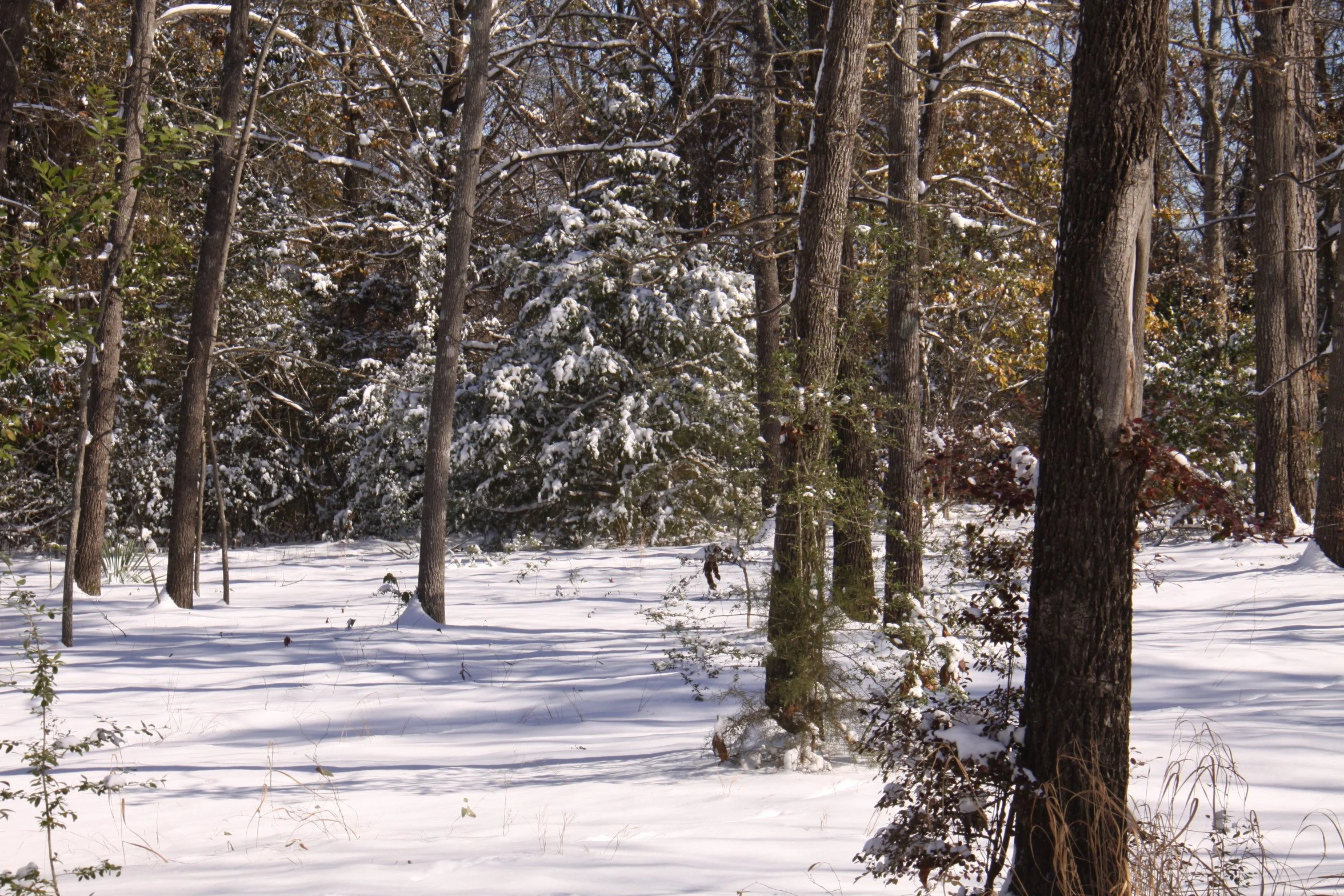
Winter can be a magical time to connect with nature. Think about what you enjoy seeing in your favorite Hallmark winter movie (notice a theme here?): Fluffy snow falling from the sky, icicles on bare tree limbs, exciting snowball fights, carriage rides through snow covered lanes and plumes of smoke rising from chimneys. Combining the beauty of winter with the healing aspects of Forest Therapy is a win and I learned some tips to help me take advantage of that. It starts with what I wear.
I can’t say it too much – you need to layer. However, not all layers are created equal. Best practice calls for a thermal base (merino wool is an optimal fabric for this), an insulating mid-layer (think fleece/wool/down), and an outer shell (hardshells which are fully water and wind proof OR softshells which are more water and wind resistant). Ideally, this outer shell will cover your torso and your legs (e.g., parka and snow pants). Don’t forget accessories like warm, waterproof boots, wool socks, a hat, scarf or neck warmer, and gloves or mittens (did you know that mittens are warmer than gloves?!).
Each layer has a specific function that keeps you from feeling the full force of cold temperatures. The thermal layer pulls sweat away from your body (and yes, you still can sweat a bit even when it’s cold), the mid layer traps heat close to your body, and the outer shell creates an ideal environment for your other clothes to trap your body heat effectively.
Other things to consider are:
1. Level of activity: Ensure you can add/remove layers to prevent overheating in high activity or freezing in less intense activity.
2. Material really does matter: Avoid cotton as it pulls heat away from your body. Wool and synthetic fabrics are best.
3. Protect your skin: Use balm and/or lotion for your lips and hands. If there’s bright snow, wear sunglasses. The sunlight reflecting off snow can be just as bright as the summer sunshine.
4. Quality is also a consideration: Higher quality coats and boots will not only be made with better materials and construction; they outperform and outlast cheap alternatives. Get the highest quality you can in your budget.
And lastly, but certainly not least, don’t be afraid to take a cup of java/tea/hot cocoa in an insulated cup with you. It’ll help warm you from the inside!
With all this in mind, I hope you feel more comfortable and confident about enjoying the beauty of nature in the winter. It really is an experience like no other!
